Olio at the Arizona Healthcare Association Annual Convention and Expo
For most SNFs, the handoff to home health and hospice has long been a difficult part of care to manage—no repeatable process, no data on how partners perform, and no visibility once a patient walks out the door. American Senior Communities decided that wasn't good enough and built a standardized transitions of care process across all its SNFs. They used a transitions of care platform to digitize the handoff, track every patient for 31 days post-discharge, and finally see how each home health and hospice partner is actually performing. The result: fewer readmissions, smoother discharges, accountable network partners, and the data to back up every conversation with payers and hospitals.
Blake Hansen
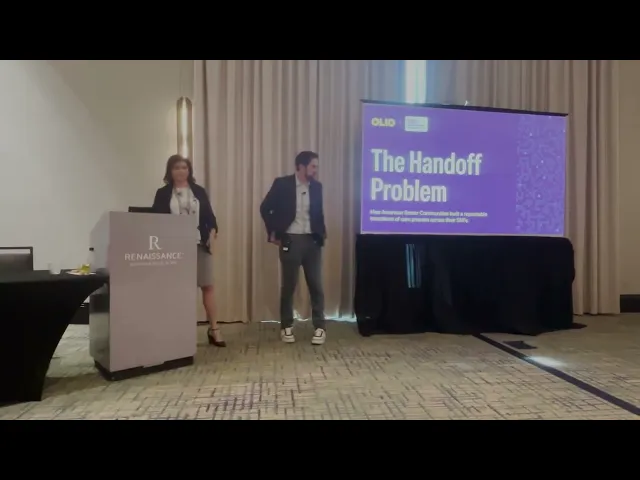
At this year's Arizona Healthcare Association Annual Convention and Expo, American Senior Communities (ASC) shared how they built a repeatable transitions of care process across 94 skilled nursing facilities in Indiana. ASC's VP of Quality Network Janean Kinsey and Olio's VP of Provider Experience Blake Hanson walked the room through what they set out to solve, what the data showed them, and where they are taking it next.
The starting point was a question from senior leadership: how successful are ASC's buildings at discharging people to the community? Janean did not have a good answer. The quality measures she had access to were two years old. She audited the process, checked that the right meetings and referrals were happening, and still could not tell you what actually happened after a patient left the building.
After partnering with Olio, ASC standardized their outbound referral process and started tracking every patient for 31 days post-discharge. What came back was a set of blind spots they did not know they had. A large share of outbound referrals were going to home health with less than a day of notice before discharge. Denial rates were sitting around 40%. Start-of-care timelines varied widely across their network. Their social workers had no idea any of this was happening, and neither did anyone at the home office.
Once they could see it, they could act on it. ASC set a 48-hour lead time standard and communicated it to their network partners. They built a network scorecard using engagement scores, denial rates, response times, and readmission data to identify which home health and hospice partners were actually performing. That data also gave them something real to bring into conversations with payers and hospital systems.
Janean noted that a lot more came out of this than they expected. The ability to stay connected to patients after discharge, influence outcomes into the home, and track the full care journey changed how ASC thinks about their role beyond the four walls of the facility.